
If you’re starting in import-export, one question always pops up first: what are incoterms?
What are incoterms? Learn incoterms explained in a simple, fun way. Perfect for beginners to understand FOB vs CIF, risk transfer, and avoid costly mistakes in global trade.
Think of Incoterms like the rules of a football match ⚽. Without rules, players argue, chaos happens, and nobody knows who’s responsible. In global trade, Incoterms define who does what, who pays what, and who takes the risk.
Whether you’re shipping wooden furniture to Europe or importing machines from China, understanding incoterms for beginners is your first real step into the business world.
Lesson 1: What Are Incoterms (Simple Explanation)
Key Concept:
Incoterms (International Commercial Terms) are standardized trade rules that define responsibilities between buyers and sellers.
Real Example:
A Vietnamese exporter sells wooden chairs to the US under FOB terms.
Common Mistake:
Thinking Incoterms cover everything (they don’t cover payment terms).
Action Task:
Search “Incoterms 2020 chart” and print it.
Lesson 2: Why Beginners Must Learn Incoterms Early
Key Concept:
Incoterms reduce confusion, prevent disputes, and protect your money.
Real Example:
A beginner importer paid extra fees because they misunderstood CIF.
Common Mistake:
Ignoring Incoterms until problems happen.
Action Task:
List 3 risks you want to avoid in your business.
Lesson 3: Understanding Incoterms Risk Transfer
Key Concept:
Risk transfer = the moment responsibility shifts from seller to buyer.
Real Example:
Under FOB, risk transfers when goods are loaded on the ship.
Common Mistake:
Confusing cost with risk.
Action Task:
Draw a simple shipping timeline and mark risk transfer.
Lesson 4: EXW – The “You Handle Everything” Rule
Key Concept:
EXW = seller does almost nothing.
Real Example:
You buy machines EXW from China—you arrange pickup, shipping, customs.
Common Mistake:
Beginners choosing EXW thinking it’s cheaper.
Action Task:
Avoid EXW if you’re new.
Lesson 5: FOB – The Most Popular Shipping Term
Key Concept:
Seller delivers goods onto the ship.
Real Example:
Wood exporter in Vietnam loads goods at Hai Phong port.
Common Mistake:
Not checking loading costs.
Action Task:
Ask your supplier: “Is this FOB price all-inclusive?”
Lesson 6: CIF – Insurance Included but Watch Out
Key Concept:
Seller pays shipping + insurance.
Real Example:
You import goods CIF—seller arranges shipment.
Common Mistake:
Trusting low-quality insurance.
Action Task:
Always ask for insurance details.
Lesson 7: CFR – Cheaper but Riskier
Key Concept:
Like CIF but without insurance.
Real Example:
Machinery shipped CFR—buyer bears risk.
Common Mistake:
Forgetting to buy insurance.
Action Task:
Compare CFR vs CIF pricing.
Lesson 8: DDP – The “All Done for You” Option
Key Concept:
Seller handles everything.
Real Example:
You receive goods directly at your warehouse.
Common Mistake:
Hidden costs in price.
Action Task:
Ask for cost breakdown.
Lesson 9: FOB vs CIF – Which One Should You Choose?
Key Concept:
FOB = more control. CIF = more convenience.
Real Example:
Experienced traders prefer FOB.
Common Mistake:
Choosing CIF blindly.
Action Task:
Try both in small shipments.
Lesson 10: Logistics Steps in Real Shipments
Key Concept:
Booking → Pickup → Export → Shipping → Import → Delivery
Real Example:
Wood shipment from Vietnam to USA.
Common Mistake:
Ignoring documentation.
Action Task:
Write down all steps.
Lesson 11: Hidden Risks Beginners Often Miss
- Poor insurance
- Unexpected fees
- Wrong Incoterm usage
Action Task:
Talk to a freight forwarder.
Lesson 12: How to Read a Sales Contract with Incoterms
Key Concept:
Look for Incoterm + location.
Example:
FOB Hai Phong Port
Action Task:
Review a sample contract.
Lesson 13: Choosing the Right Incoterm for Your Business
Key Concept:
Depends on experience, budget, and risk tolerance.
Action Task:
Start with FOB or CIF.
Lesson 14: Working with Freight Forwarders
Key Concept:
They are your logistics partner.
Action Task:
Contact 2–3 forwarders.
Lesson 15: Case Study – Exporting Wooden Furniture
Simple flow:
- Factory → Port → Ship → Buyer
Lesson: FOB works best.
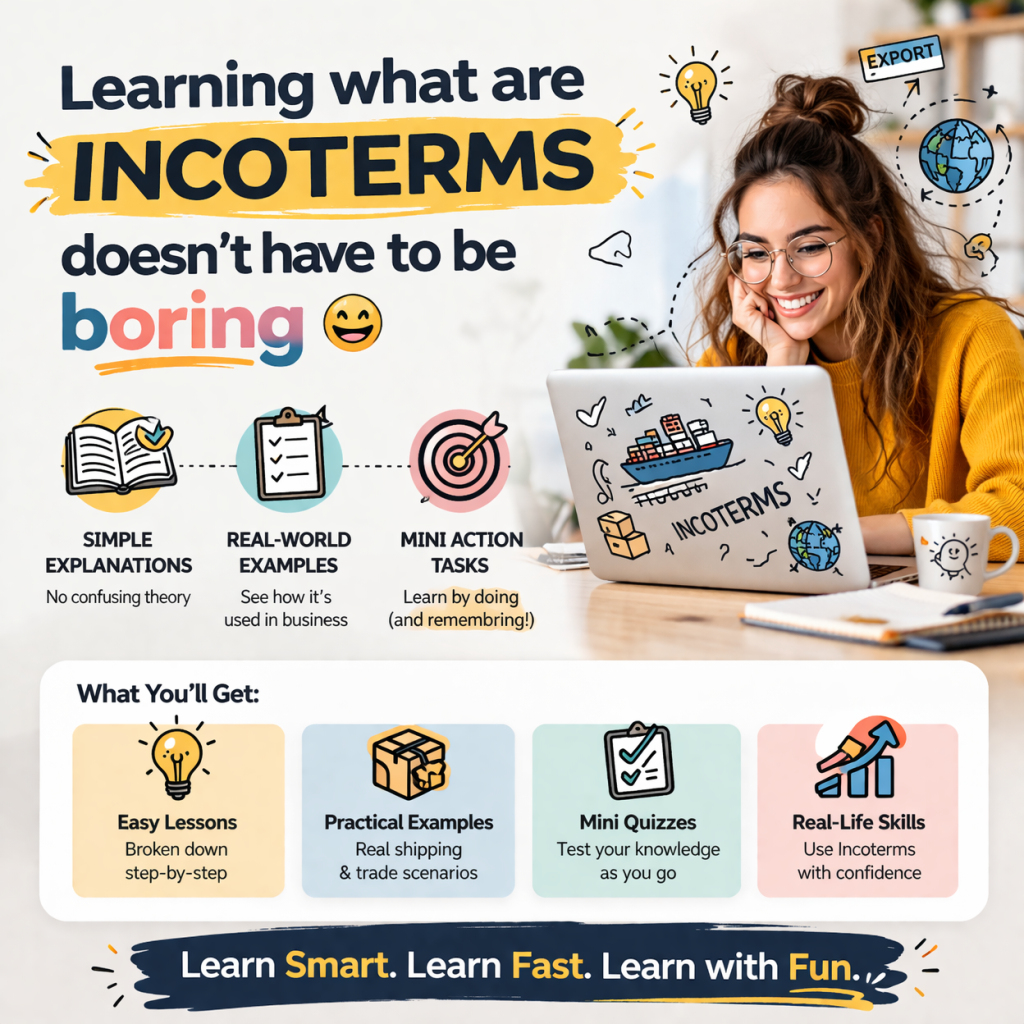
Lesson 16: Case Study – Importing Machinery
Lesson: CIF is easier for beginners.
The Future of Incoterms in Global Trade
Global trade is changing fast 🚀
- AI will automate logistics
- Smart contracts will reduce disputes
- E-commerce is growing rapidly
- Risk management > cost saving
👉 Beginners who understand what are incoterms early will have a huge advantage.
✅ FINAL CHECKLIST
- Understand 5 main Incoterms
- Know risk transfer points
- Work with reliable partners
- Always check contracts

❓ FAQ (SEO Optimized)
What are Incoterms?
Incoterms are international rules that define responsibilities between buyers and sellers in global trade.
Why are Incoterms important?
They prevent confusion, reduce risk, and clarify costs.
Which Incoterm is best for beginners?
FOB and CIF are the easiest to start with.
What is FOB vs CIF?
FOB gives control to the buyer; CIF is more convenient but less transparent.
What is Incoterms risk transfer?
It’s the moment responsibility shifts from seller to buyer.
Are Incoterms legally binding?
Yes, when included in contracts.
🎁 BONUS: Free Consultation & Partner Connection in Vietnam
Starting import-export alone can feel overwhelming.
👉 Get help with:
- Supplier connection
- Freight forwarders
- Real business setup
Contact us for a free consultation in Vietnam and start your journey today!
Learn more from the official ICC guide:
https://iccwbo.org/business-solutions/incoterms-rules/
Anteduenglish.comGlobal business resources